


Should classical Armenian literature be adapted across its two branches — Tumanyan rendered in Western Armenian, Baronian in Eastern — so that every Armenian child can read every Armenian author without a linguistic barrier in the way? Or is reading across branches itself how children come to know both variants of their literary tradition and the nuances that distinguish them — a bridge that adaptation would quietly remove? This is a question Vlume cannot answer alone. The readers, parents, and educators who actually put these books into children’s hands are the ones whose judgment matters here, and at the end of this piece we are asking for yours. Before the poll, though, the question deserves a fair hearing on both sides — which is what the rest of this article tries to give it.
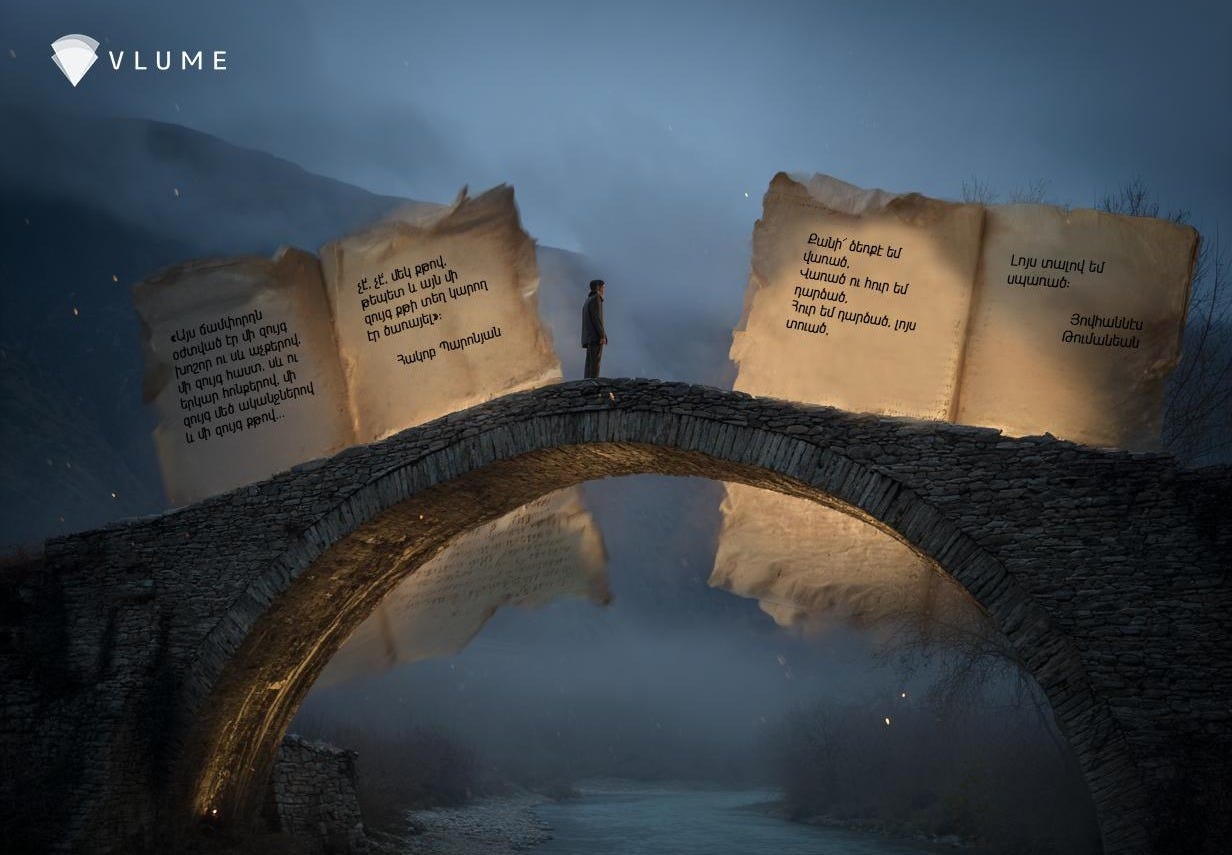
What We Mean by “Adaptation”
Changing orthography — between classical and modern — needs to be addressed separately, but for the sake of this exercise that is not what we are asking about. By adaptation we mean rendering a work from one branch of literary Armenian into the other, Eastern into Western or the reverse, while keeping the text, structure, and authorial intent intact. This can take several forms, from full rewrites to facing-page editions or digital toggles. Our focus is children’s literature, where the stakes of access are highest.
The Case for Adapting
The argument for adaptation begins with access. For many Diaspora children, Armenian is already a second or third language, and the additional layer of an unfamiliar branch can turn a beloved classic into a decoding exercise. Humor, pacing, and emotional immediacy — the very things that make a book memorable — are the first to suffer when a young reader is working to parse vocabulary. Read in the familiar branch, Baronian’s sharp satire lands in a single breath:
«Այս ճամփորդն օժտված էր մի զույգ խոշոր ու սև աչքերով, մի զույգ հաստ, սև ու երկար հոնքերով, մի զույգ մեծ ականջներով և մի զույգ քթով... չէ՛, չէ՛, մեկ քթով, թեպետ և այն մի զույգ քթի տեղ կարող էր ծառայել»։ ~ Յակոբ Պարոնեան
«Քանի՜ ձեռքէ եմ վառած, Վառած ու հուր եմ դարձած, Հուր եմ դարձած, լոյս տուած, Լոյս տալով եմ սպառած:» ~ Յովհաննէս Թումանեան
The concern reaches beyond children. When a contemporary reader — a university student, a software engineer — sets aside Muratsan or Odian because the branch feels foreign, something has gone wrong. If classical authors remain accessible only in their original branch, they risk narrowing into specialist material: studied, but not read. Adaptation, in this view, is how a literary inheritance stays alive across generations.
The Case for Preserving
The counterargument is that cross-branch reading is itself part of how children come to know the other variant. Removing the encounter removes the acquisition. A child who reads Tumanyan in Western Armenian — with effort, with a parent or teacher alongside — is doing more than reading a story; they are building a bridge to half of their literary tradition.
«Քանի՜ ձեռքից եմ վառվել, Վառվել ու հուր եմ դառել, Հուր եմ դառել` լույս տվել, Հույս տալով եմ սպառվել։» ~ Յովհաննէս Թումանեան
«Այս ճամբորդն օժտուած էր զոյգ մը խոշոր եւ սեւ աչքերով, զոյգ մը հաստ, սեւ եւ երկար յօնքերով, զոյգ մը մեծ ականջներով եւ զոյգ մը քիթեր․․․ չէ՛, չէ՛, մէկ քիթով, թէպէտ եւ բայց զոյգ մը քիթերու տեղ կրնար ծառայել։»։ ~ Յակոբ Պարոնեան
There is also the question of voice. Language is not just information — it carries the author’s psychology, their breath, the taste and scent of an era. Tumanyan read in Eastern Armenian carries what one might call his “Lori breath” — a regional texture that close-variant translation tends to flatten. Eastern and Western Armenian are close enough that rendering between them can feel deceptively simple, but rhythm and regional voice are often the first casualties. And there is a practical concern: Armenian publishing operates on a small scale, and producing parallel editions risks splitting an already limited readership.
What Other Literary Traditions Do
Armenian is not the only language with two living literary standards, and other traditions have arrived at different answers.
Portuguese offers one model. European and Brazilian Portuguese are both fully literary standards, both taught, both actively published. Adaptation between them is routine — children’s books in particular are often localized separately for each market, with foreign works like Harry Potter appearing in distinctly different editions on each side of the Atlantic. Whether this is necessary or excessive remains an active debate among Portuguese educators themselves.
Norwegian offers the opposite answer. Its two written standards, Bokmål and Nynorsk, emerged in the nineteenth century after independence from Denmark: Bokmål from a gradual Norwegianization of Danish, reflecting urban eastern speech; Nynorsk built from rural western dialects to preserve a voice the urban standard did not carry. Both remain fully literary, taught in schools and published for children. Adaptation between them is not standard practice. Each represents a different Norway — urban/eastern versus rural/western — and collapsing them into one would erase one of those voices.
Why Armenian Is Its Own Case
Neither model maps cleanly onto us. Portuguese is spoken by hundreds of millions across stable national markets; Norwegian’s two standards coexist within a single country, supported by a school system that ensures every reader encounters both. Armenian’s readership is smaller than either, more dispersed, and shaped by a Diaspora whose relationship to the language is already under strain.
There is also a layer neither parallel captures. Portuguese closed much of its transatlantic spelling gap with the 1990 Orthographic Agreement; Norwegian’s two standards share a single orthographic system. Armenian does not. The gap between Classical Orthography — used in Western Armenian and across most of the Diaspora — and Modern Orthography, used in the Republic, is a visual barrier that sits on top of the vocabulary and grammatical differences between branches. In practice, rendering a work across branches is often as much a matter of spelling conversion as it is of linguistic translation. That is a separate conversation from the one this poll is asking, but it is part of why the Armenian question cannot be answered by pointing at anyone else’s solution.
We also have tools earlier generations did not — digital editions can offer toggles, glosses, and side-by-side views that print never allowed. The decision is not only about what to publish, but about what the reading experience itself can now look like.
Over to you
We would like to hear from the parents, educators, and readers who bring these books into children’s hands.
We will share what we hear — and what we decide to do with it.