


A small but vocal group of educators dismiss digital reading outright, convinced that any screen time is harmful for children’s learning. They equate reading a book on a tablet with scrolling through social media or playing video games — as if all digital experiences are the same. They are not. As an Armenian digital library working with schools, libraries and communities globally, we see the difference every day. In this article, we share credible research and our own experience to make the case that — particularly in our circumstances — the evidence is overwhelmingly in favor of digital reading.
The Digital Book: A Continuation, Not a Replacement
The question is not print versus digital — it is whether a child is reading at all. The International Literacy Association, a global network of over 300,000 educators across 128 countries, affirmed in its 2024 position statement that quality matters more than medium. A peer-reviewed analytical review published in the International Journal of Environmental Research and Public Health, examining 14 randomized controlled trials involving over +1,100 children, reached a clear conclusion: when e-books are properly selected and used, children develop literacy skills equally well and sometimes better than with print books. The NAEYC and Fred Rogers Center joint position statement on technology in early childhood education puts it simply: it is the educational content that matters — not the format in which it is presented.
For Armenian children in the Diaspora, where physical books in their language are scarce, costly, and difficult to find, the digital book does not replace the printed book. It reaches where the printed book never could.
Better Together
A child curled up with a physical book, turning pages, absorbed in a story — that remains one of the most powerful images in education.
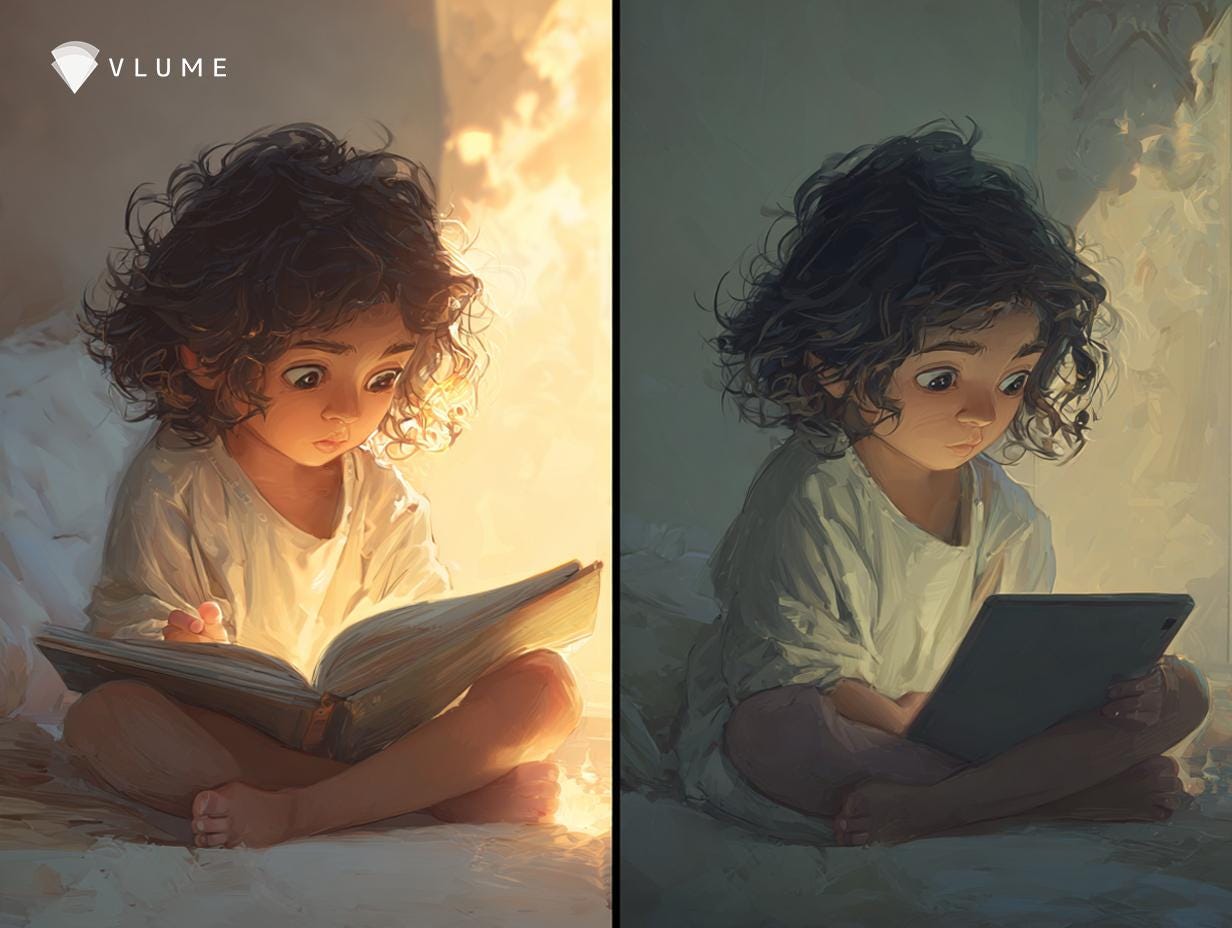
Print offers focus, a deep engagement, and a quiet space free from distraction. What the research consistently shows, however, is that the best outcomes come not from choosing one format over the other, but from combining both. A 2024 meta-analysis published in Heliyon, examining 37 experimental studies, found no significant difference in overall reading comprehension between digital and print — and concluded that the two formats have distinct advantages that complement each other. Digital reading brings accessibility, portability, and interactive support. When the content is well-designed and free from distraction, research shows children focus and comprehend just as effectively as with print.
The most important factor is not the medium — it is the educator who selects the right book, the parent who reads alongside the child, and the classroom conversation that follows. The format is the vehicle. The adult in the room is the driver.
A Cultural Bridge, Not a Barrier
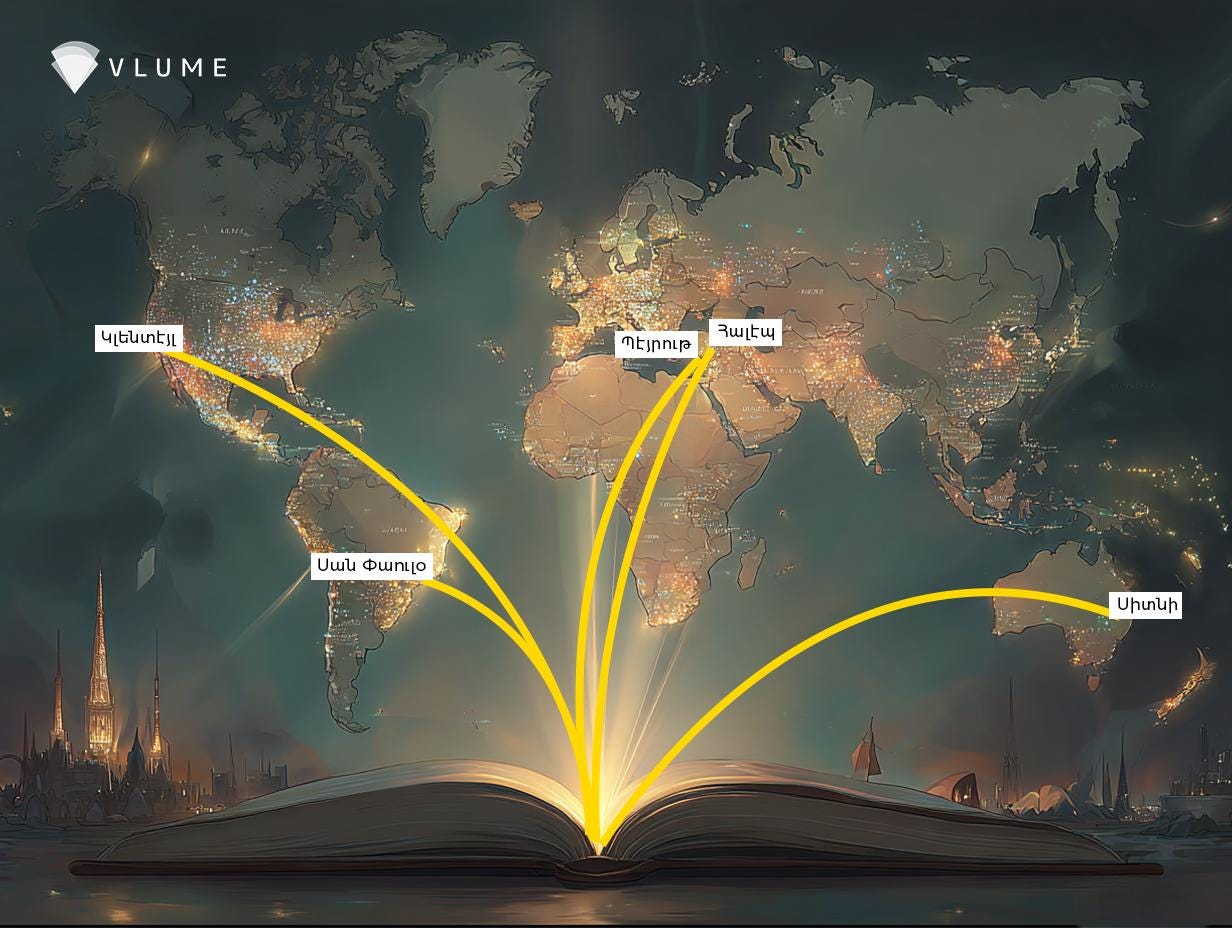
An Armenian child in Aleppo, Beirut or Glendale may have access to bookstores and community libraries. A child in a small Midwestern town, in São Paulo, or in Sydney almost certainly does not — and even where Armenian books exist, many beloved titles are long out of print with no prospect of reprinting. A digital library solves both problems at once: it makes existing literature accessible everywhere, and it revives works that would otherwise be lost to a generation.
But digital does something more. It allows creators to build new literature more efficiently — to write, illustrate, publish, gather feedback from teachers and readers, and continuously improve. This is exactly what Vlume’s children’s illustrated book initiative, launched with the sponsorship of the Calouste Gulbenkian Foundation, is doing: producing hundreds of original Armenian children’s books — from science and nonfiction to age-appropriate fiction rooted in Armenian themes — developed in close collaboration with educators.
Meet Children Where They Are
Let us be honest about what we are up against. The challenge for Armenian digital reading is not competition with printed Armenian books — that model has already proven insufficient, limited by scale, distribution, and economics. The real competition is far more formidable. In the best case, we are competing with English, French, Spanish, Arabic and every other dominant language that fills our children’s classrooms, bookshelves, and streaming platforms. In the worst case — and this is the more common one — we are competing with video games, social media, short-form content, and the endless pull of instant gratification. Every hour a child spends scrolling is an hour not spent reading — in any language. A digital Armenian library does not ask children to step away from their screens. It meets them there, and offers them something meaningful in a space dominated by the disposable.
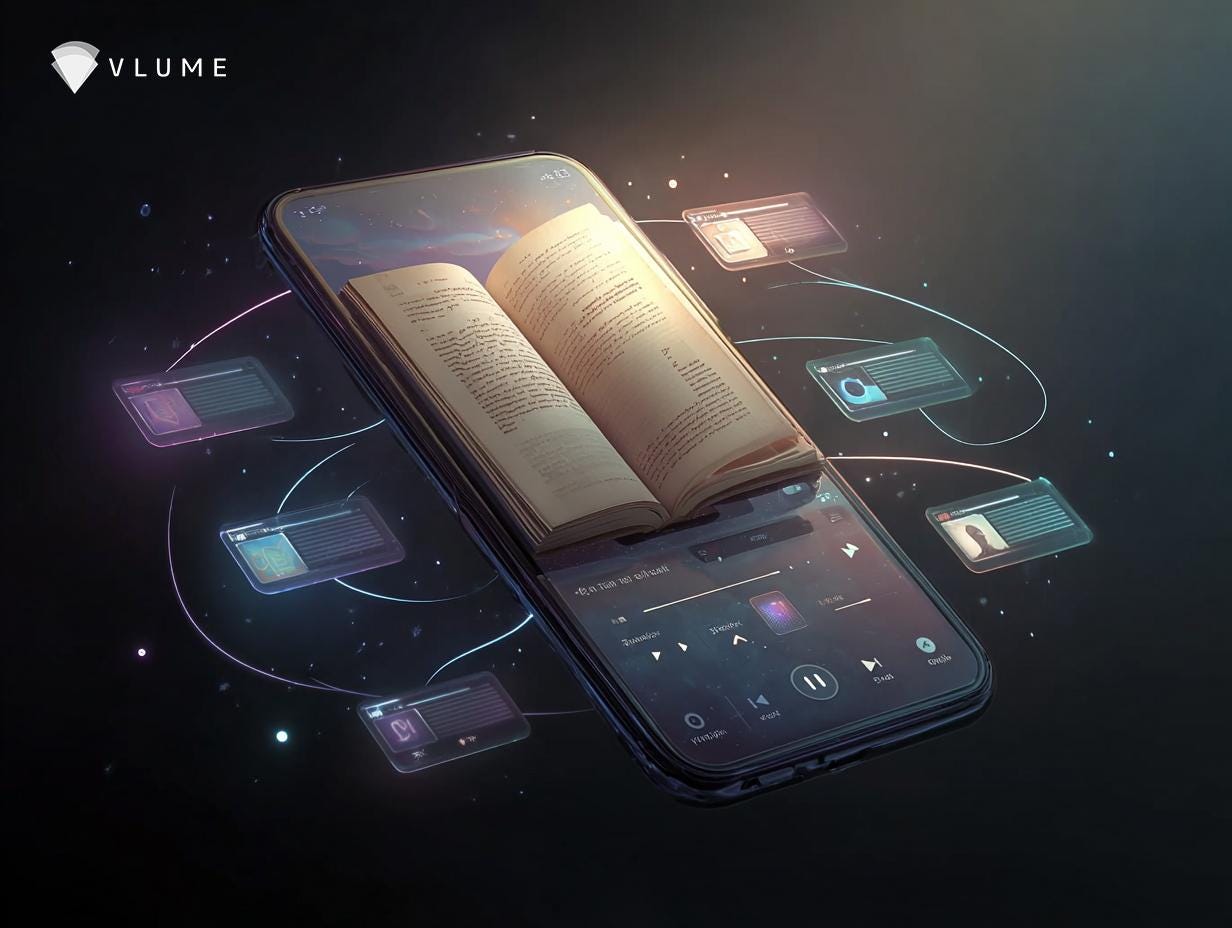
Let the debates about format continue. But a child who reads in Armenian — regardless of how — has already won.
What Vlume Is Building
Vlume is not simply digitizing Armenian books. We are building a library designed to make young readers want to read in Armenian — not because they are told they must, but because what they find is genuinely exciting. Our growing catalog of ebooks, audiobooks, and illustrated children’s books across both Eastern and Western Armenian is curated for one purpose: to dazzle children with choice. Stories that span science, history, music, art, and age-appropriate fiction — each title developed with educators, each carrying real educational value. Because when a child has ten compelling Armenian books to choose from instead of one, reading stops feeling like homework.
The goal, of course, goes beyond reading Armenian. We want to raise children who are culturally grounded yet open to the world — young readers who develop strong values, understand and respect other cultures, think critically, and carry the confidence and mindset to succeed in whatever path they choose. Armenian literature is both the destination and the path — it strengthens a child’s roots while shaping the kind of person they become.
And we are just getting started. In 2026, Vlume is introducing new features designed to empower both readers and teachers with tools that printed editions simply cannot offer — from interactive reading support to immersive audio experiences that meet every child at their level. You can read the full details in our 2025–2026 announcement.